


WELCOME TO
Sri Lanka Wildlife Holidays
From elusive leopards in Yala to blue whales off Mirissa, Sri Lanka is a wildlife wonderland waiting to be explored.
Tailor-made holidays with a focus on hand picked boutique hotels and luxury hideaways
Let's plan your perfect tripSri Lanka brings jungle, plains and ocean together in one wildlife rich island.
Sri Lanka is a compact island with astonishing biodiversity, home to over 100 mammal species and a bird list that rivals far larger countries. On a well planned Sri Lanka wildlife holiday, you can track leopards through Yala’s dusty tracks, watch elephants gathering at Minneriya and see blue whales breaking the ocean’s surface off the southern coast, all within a single journey. Add in rare sloth bears, endemic birdlife and vibrant marine ecosystems, and the island becomes a year round safari destination unlike anywhere else in Asia. This Sri Lanka wildlife travel guide explains where to go, what you can expect to see and when timing makes the greatest difference.
A team of real experts, brilliant at designing bespoke holidays.
Call 01273 923100 to start planning your Sri Lanka holiday today.


Wildlife Holidays in Sri Lanka
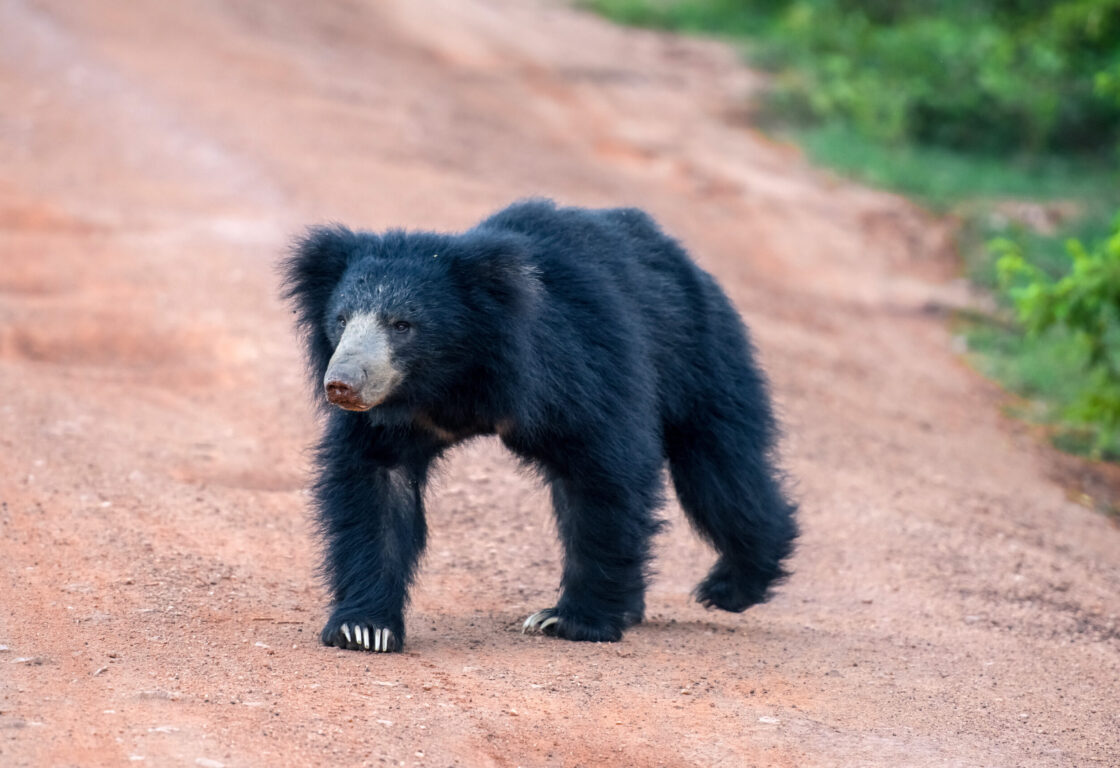


Wildlife of Sri Lanka
Sri Lanka is one of the most rewarding wildlife holiday destinations in Asia. On one compact island you can track leopards, watch large elephant herds, walk through primary rainforest and head offshore in search of blue and sperm whales, all without internal flights.
Wildlife is shaped by clearly defined ecological zones. The dry zone national parks of the south, east and north west hold most large mammals. The wet zone in the south west protects lowland rainforest and the highest concentration of endemic birds. The central highlands introduce cooler montane habitats, while deep offshore trenches close to the coast allow seasonal whale sightings.
With over 90 mammal species and more than 400 bird species, Sri Lanka delivers serious biodiversity within practical travel distances. That balance of density and accessibility makes it particularly well suited to couples and family wildlife holidays alike.


Best National Parks in Sri Lanka
Yala National Park is Sri Lanka’s most famous safari reserve and widely regarded as the best place in Asia to see leopards. It is divided into five blocks. Block 1 receives the highest visitor numbers and offers strong leopard density in relatively open terrain. During peak months from February to July and school holidays, it can feel busy.
Yala Block 5 offers a quieter alternative with similar habitat and wildlife but significantly fewer vehicles. Choosing the right block and entrance gate makes a tangible difference to the overall safari experience.
Wilpattu National Park, Sri Lanka’s largest reserve, offers a more remote atmosphere. Its landscape of natural lakes known as villus attracts wildlife into open clearings within forest. Leopard sightings are strong, though vegetation is denser and patience is often required.
Minneriya, Kaudulla and Hurulu form an interconnected elephant corridor in the Cultural Triangle. Udawalawe National Park offers some of the most reliable year round elephant sightings in open grassland terrain.
Gal Oya National Park remains one of the least visited reserves. Centred around a vast reservoir, it offers Sri Lanka’s only boat safari experience and noticeably lower visitor numbers.


Leopards in Sri Lanka
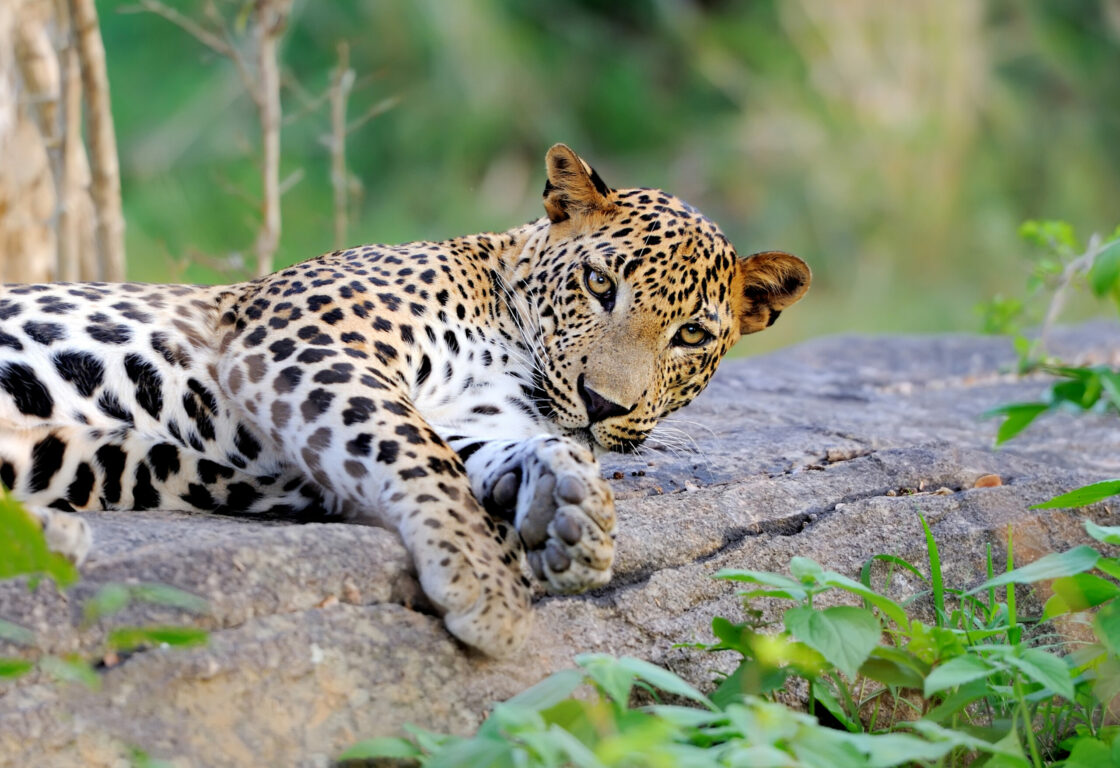
Sri Lanka’s leopard, Panthera pardus kotiya, is found nowhere else in the world. Population estimates suggest around 700 to 1,000 individuals remain in the wild, making the island one of the most important leopard strongholds in Asia.
Yala National Park is widely known for having one of the highest recorded leopard densities in the region, with studies in some blocks indicating densities of around one leopard per square kilometre. This makes sightings here more likely than in most other parts of Asia, although wildlife is never guaranteed. Early morning drives and experienced guiding significantly increase your chances, particularly in the drier months when prey gather near water.
Wilpattu National Park also supports a healthy population. Vegetation is denser and sightings can take longer, but with fewer vehicles in the park, encounters often feel quieter and more exclusive.


Whale Watching in Sri Lanka
Off Sri Lanka’s southern coast, the ocean floor drops steeply just beyond the shoreline. This deep water brings blue whales within reach between November and April. Seeing the world’s largest animal surface and exhale just metres from your boat is a rare privilege.
Conditions are seasonal and sightings are never guaranteed, but in the right months encounters are frequent. Early departures offer calmer seas and better visibility.
On the east coast near Trincomalee, whale watching runs from May to September. Spinner dolphins often travel in large pods, racing alongside boats in coordinated arcs, adding energy to the open ocean experience.


Elephants in Sri Lanka
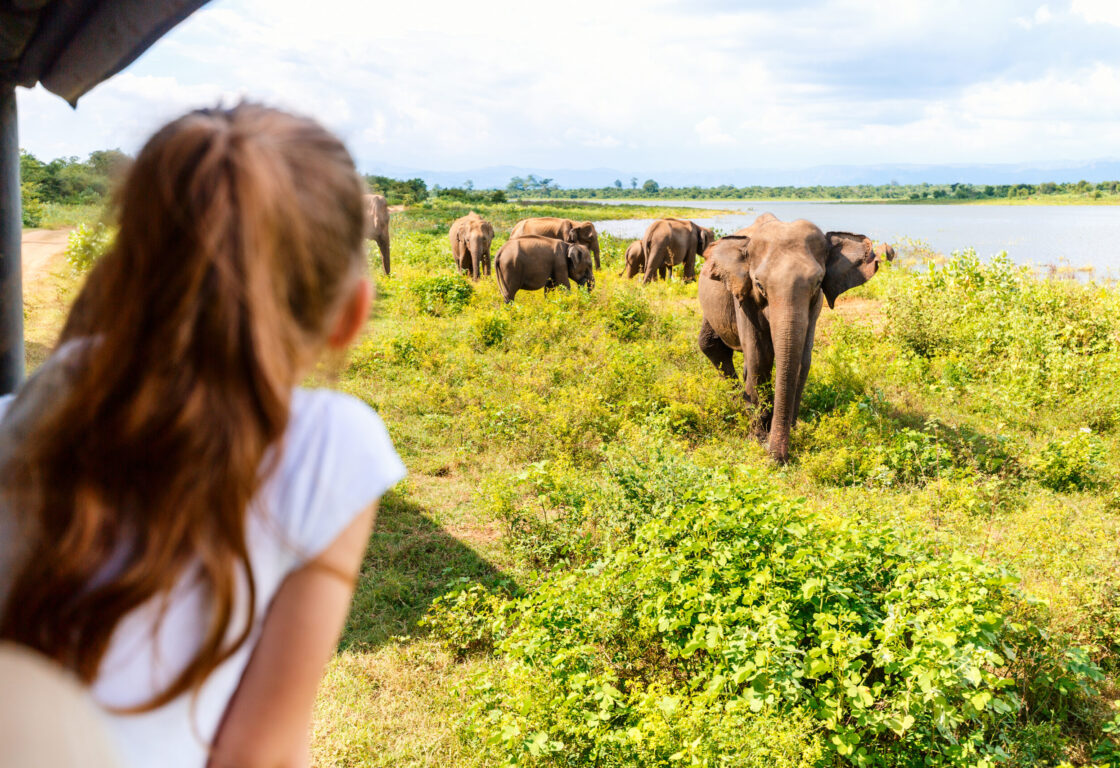
Sri Lanka is home to an estimated 6,000 to 7,000 wild Asian elephants, making it one of the most significant elephant habitats in Asia. Elephants are widely distributed across the dry zone and are regularly seen in Yala National Park, Udawalawe National Park, Wilpattu National Park and Gal Oya National Park.
In Yala, elephants are commonly encountered during safaris, often as solitary bulls or smaller family groups moving between scrub and waterholes. Sightings are frequent throughout the year, particularly during drier months when elephants concentrate around remaining water sources.
For larger herds, Minneriya National Park is the most dramatic setting. Between July and September, as surrounding grasslands dry out, elephants gather around the reservoir in what is known as The Gathering. More than 200 elephants may be visible across the plains, making it one of the largest recurring congregations of Asian elephants in the world.
The movement is driven by seasonal feeding patterns rather than migration, and herds may shift toward nearby Kaudulla depending on rainfall and reservoir levels.
Udawalawe offers consistent year round elephant sightings in open terrain, often at close range. In Gal Oya, elephants are occasionally seen swimming between islands in the reservoir, a behaviour rarely witnessed elsewhere in Asia.


Birding and Rainforest Wildlife
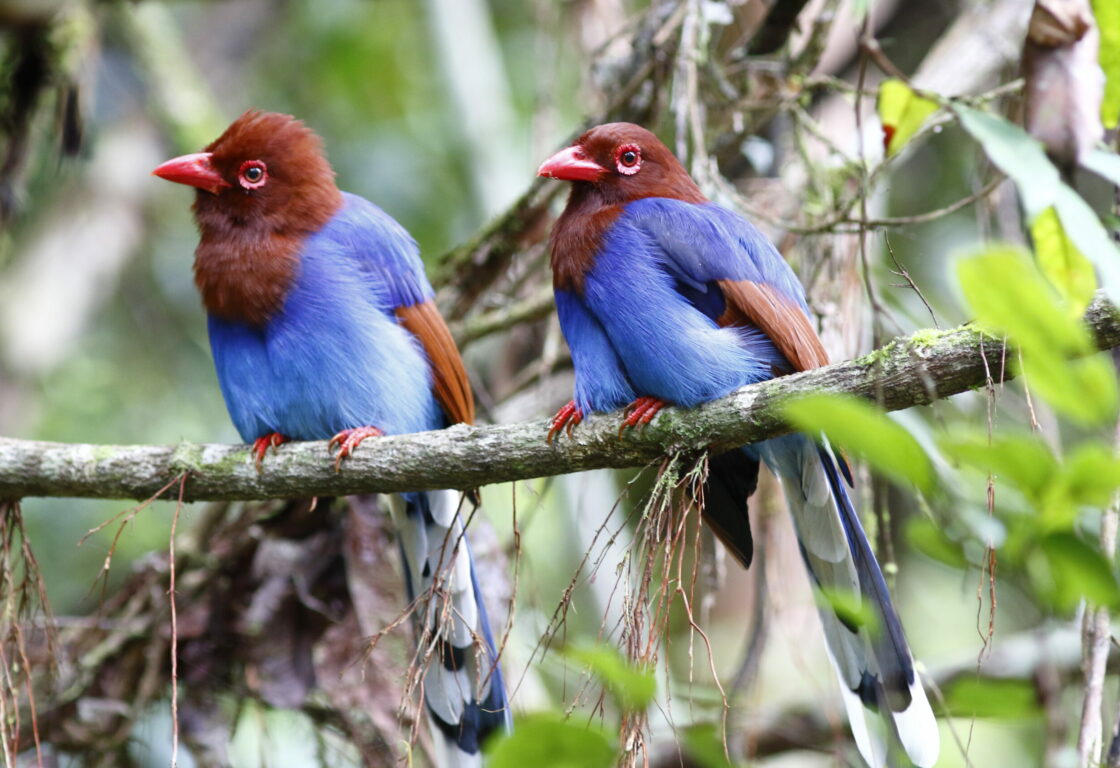
Sri Lanka is considered one of Asia’s leading birding destinations due to its high level of endemism. Sinharaja Forest Reserve is the primary site for endemic species such as the Sri Lanka blue magpie, red faced malkoha, Sri Lanka spurfowl and green billed coucal. Birding is typically conducted on foot with specialist naturalist guides, focusing on mixed species feeding flocks moving through the canopy.
Bundala National Park supports painted storks, Eurasian spoonbills, pelicans and seasonal flamingos. Migratory species arrive between November and April, significantly increasing diversity. With more than 400 recorded bird species on a compact island, Sri Lanka offers one of the highest bird densities per square kilometre in South Asia.


Best Wildlife Experiences in Sri Lanka
Wildlife holidays in Sri Lanka are centred on jeep safaris in the national parks, but the experiences vary by landscape. In Gal Oya National Park, boat safaris across the reservoir offer a quieter perspective, with elephants, crocodiles and water birds seen from the water and occasional sightings of elephants swimming between islands.
In Sinharaja Forest Reserve, wildlife is explored on foot through guided rainforest walks focused on endemic bird species and smaller mammals. Along the coast, seasonal whale watching at sea brings blue whales, sperm whales and large pods of spinner dolphins within reach. In selected southern beaches, regulated turtle nesting observations are possible during certain months.
Walking safaris inside national parks are not standard practice, and night drives are generally restricted, meaning most wildlife encounters take place during early morning and late afternoon game drives.


Wildlife Lodges and Camping in Sri Lanka
Accommodation is typically located just outside park boundaries, allowing easy access for morning and afternoon game drives while returning to comfort between safaris. Options range from boutique safari lodges and luxury tented camps near Yala to smaller eco lodges in Wilpattu and Gal Oya.
Many properties focus on natural materials, low rise design and proximity to wildlife habitats. Some offer a classic canvas safari style, while others provide permanent structures with air conditioning, private decks or plunge pools.
Family options are widely available, with larger rooms, interconnecting suites and private villas suited to multi generational travel. Across the range, sustainability and thoughtful design are increasingly central, balancing comfort with a strong sense of place.


Difference between Africa and Sri Lanka Safari
Sri Lanka and Africa offer fundamentally different safari experiences. African safaris are often structured around the Big Five and vast open savannah landscapes. Sri Lanka is not driven by a single bucket list checklist. Instead, it offers high biodiversity within a compact island, where leopards, elephants, sloth bears and blue whales can all be experienced within one journey.
Wildlife sightings in Sri Lanka are often easier than travellers expect. Leopard density in Yala is among the highest in Asia, elephant encounters are frequent across multiple parks, and seasonal whale sightings are reliable in the right months. The focus is less about ticking off iconic species and more about density and ecological variety.
The distinction lies in integration. In Sri Lanka, safari rarely stands alone. It sits naturally alongside ancient cities, tea country and coastline, all connected by road without internal flights. If you are seeking diverse wildlife across multiple habitats rather than a single headline species, Sri Lanka delivers a concentrated and highly varied safari experience.


Best Time to Visit Sri Lanka for Wildlife
Wildlife can be seen year round, but location and season matter. Yala and Udawalawe are generally best from December to April, with particularly strong leopard visibility in the drier months from February to July.
The elephant Gathering at Minneriya typically peaks between July and September.
Whale watching off Mirissa is strongest from November to April. Trincomalee operates from May to September.
Birding is most diverse between November and April when migratory species are present.
Timing can dramatically shape the experience. Visiting during the right seasonal window increases wildlife concentration, improves visibility and reduces the impact of monsoon conditions on both land and marine sightings.


Talk to us about your perfect trip to Sri Lanka
Call 01273 923100 to start planning your Sri Lanka Holiday today.
Our top inspirational Sri Lanka holiday ideas


Sri Lanka Wildlife Highlights
A wildlife enthusiast's dream, offering thrilling safaris in various national parks blended with some of the best properties on the island!


Sri Lanka Wildlife in Style
A wildlife enthusiast's dream, offering thrilling safaris in various national parks blended with some of most luxurious properties on the island!


Discover Sri Lanka
Discover Sri Lanka: scenic views, rich culture, fascinating history, wildlife, and brilliant boutique hotels.


It's about you
We create exceptional holidays, unique to you, managed in a way that makes everything easy for you, with the aim of surpassing your expectations every step of the way.


Real travel experts
Our travel expertise ensures authentic experiences, fantastic boutique hotels and outstanding guides that help create unforgettable holiday moments.
Peace of mind
- Unbeatable prices
- Our price promise
- A focus on owner-run properties
- Ideas & advice from true specialists
- Wonderful guides to steer the way
- 24-hour emergency support
- Financial protection from ATOL
- Superb sundowner ideas!